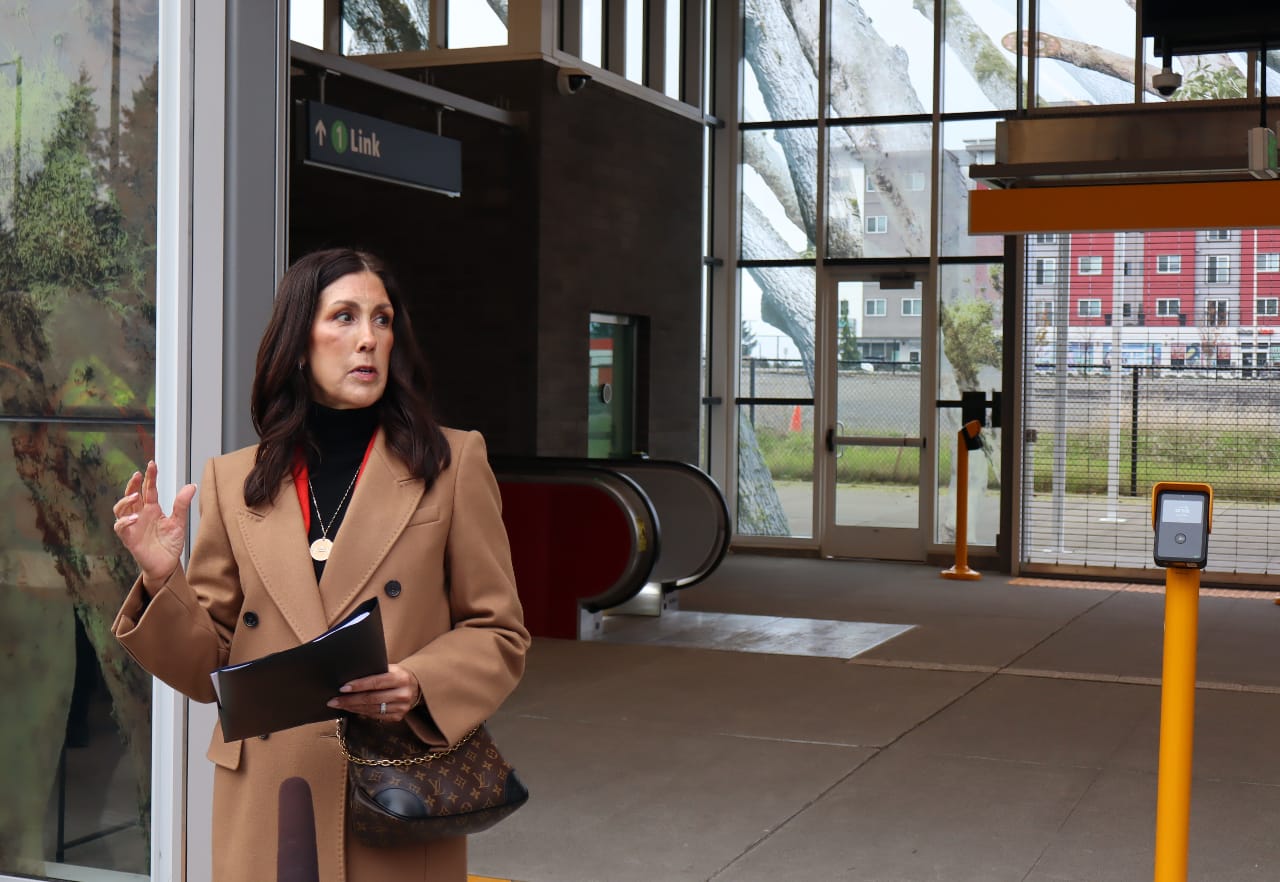
Terri Mestas, Sound Transit's Deputy CEO in charge of capital project delivery, announced her departure from the agency Monday, effective in early July. The announcement, made via an internal email to Sound Transit staff, comes just days after a high profile vote at the agency's board to rebalance the 2016 Sound Transit 3 (ST3) plan, putting several major system expansion projects in limbo due to lack of projected funding and pushing out timelines for others.
Hired in 2024 as Sound Transit's first head of "megaproject delivery", Mestas' role came directly out of a set of recommendations made in 2022 by an outside Technical Advisory Group (TAG), composed of industry experts. With a capital program of the size and scope that few transit agencies in the U.S. are dealing with – the May 28 board vote advances $57.5 billion in projects – that group called for Sound Transit to build up an experienced capital delivery team.
Other hires following Mestas included Brad Owen, currently tasked with leading the capital delivery team for the Ballard and West Seattle Link Extensions.
Owen will take over the role as Chief Capital Delivery Officer in an acting capacity, with a recruitment process to follow to permanently fill what has become one of the most important roles within the 2,000-person agency.

It was Mestas that led the team developing new "bottom-up" cost estimates for the entire ST3 portfolio, turning the initial high-level estimates that had existed on paper on their head and uncovering the full scope of the $30 to $40 billion shortfall that the agency faced through the mid 2040s.
By extending the horizon of the agency's financial plan to 2052 and taking completion dates for a number of projects – including the Ballard and Interbay segments of the Ballard Link project – off the calendar, the board was able to reduce that deficit to $9.3 to $11.3 billion. But the work to reduce costs on projects like Ballard and South Kirkland-Issaquah Link lies ahead, after amendments from board members pushed the agency to consider bolder options to get projects across the finish line.
Sound Transit lured Mestas from Los Angeles World Airports, where she had been leading work on the $30 billion overhaul of LAX airport. Those upgrades have also faced cost increases and delays that mirror Sound Transit's current issues, with the $3.34 billion LAX People Mover currently in testing after initially scheduled to open in 2023.
Sound Transit spokesperson Amy Enbysk told The Urbanist that Mestas plans to relocate to California to be closer to her family.
Mestas will depart Sound Transit just as the board is advances West Seattle Link into final design, but following the completion of the Pinehurst infill station sometime later this year, the agency will find itself without any light rail projects under active construction since work started on Central Link in 2003. All eyes will be turning to Sound Transit's planning work, as delays traced to the Federal Transit Administration continue to postpone board action to advance the next projects in the queue, including Ballard Link.
Meanwhile, Sound Transit's existing system is breaking ridership records, with usage passing that of the LA Metro to become the most-used light rail system in the U.S. as of April. The heavy rail portions of the LA Metro do give the agency higher rail ridership overall.
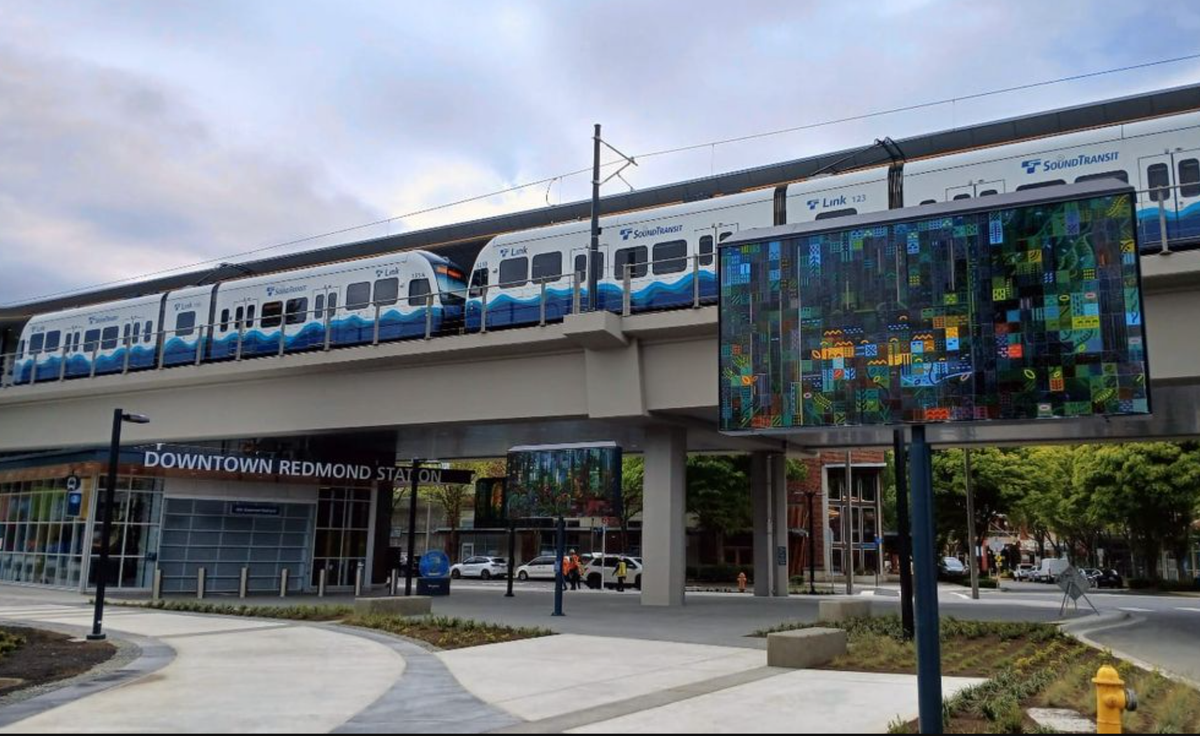
"During her tenure, Terri played a key role in strengthening Sound Transit’s capital delivery program and positioning the agency for long-term success, including opening Link extensions to Downtown Redmond and Federal Way, as well as the Crosslake Connection," Enbysk said.
Mestas is credited with reforms to Sound Transit's contracting practices, introducing the concept of the Multiple Award Task Order Contract (MATOC). Under that type of contract, the board provides approval for a broad swath of smaller multi-year, on-call contracts, streamlining the process and also allowing smaller firms to compete for work more easily. As of last December, MATOCs had been credited with bringing 176 new firms into the Sound Transit fold. Of course, many transit advocates would see that number as evidence that the agency is much too reliant on outside consultants in the first place, with a desire to see the agency do more work in-house to reduce costs.
Mestas' style reportedly clashed with some of the agency's longtime staff, with the February rehiring of Brooke Belman, a Sound Transit veteran who served as interim CEO in 2022, as another Deputy CEO changing the dynamic among top leadership considerably. On paper, Mestas reports directly to CEO Dow Constantine, a key element of the recommendation from the TAG, but sources inside the agency have indicated that it was much more complicated in practice.
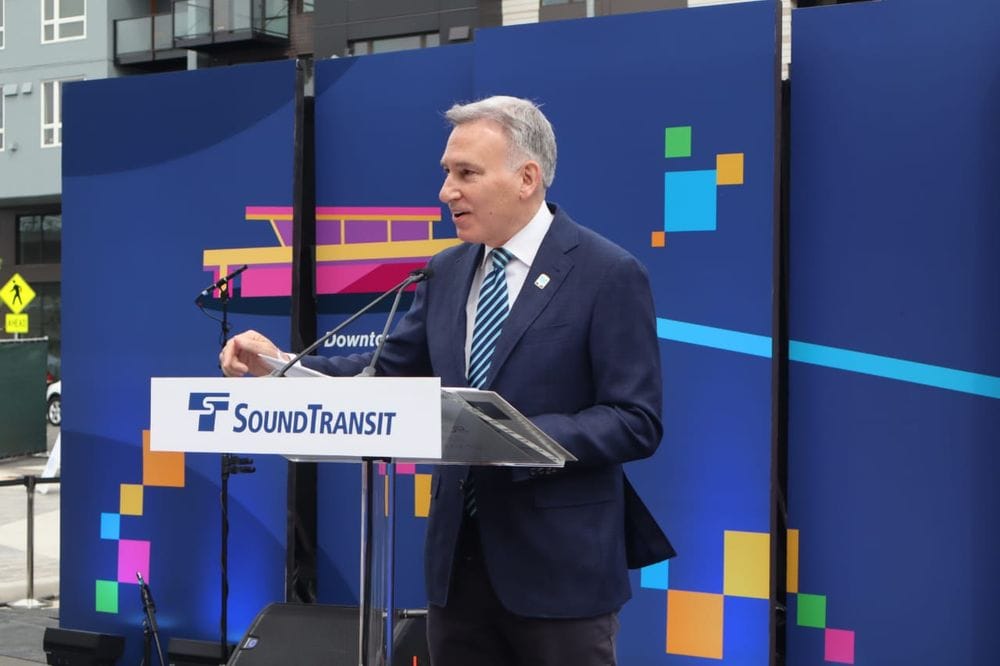
"Alongside the Board of Directors, Terri championed the implementation of several recommendations made by a Technical Advisory Group, which aimed to strengthen and improve agency capital expansion efforts. She helped advance new procurement approaches, including the agency’s Multiple Award Task Order Contract (MATOC) program, which expands opportunities for small and minority-owned businesses to participate in planning and building our system," Enbysk continued. "Her work to implement bottom-up cost estimating, champion new and innovative delivery methods, and create project and program-level cost savings through the agency’s Enterprise Initiative has positioned the agency for successful delivery of the ST3 plan. Terri also recruited a world-class capital delivery leadership team that will help to ensure a smooth transition process and maintain project momentum going forward.”
Filling Mestas' shoes will be one of the biggest tasks that Constantine will face in the months ahead, as he faces a deadline for renewal of his own contract at the end of this year. Recent board actions have led many, including longtime board member Claudia Balducci, to question Sound Transit's governance structure and its board of local elected officials. Whether the agency can hire a trusted megaproject expert able to navigate those board dynamics and get projects back on track will be a major factor in how that question plays out over the coming years.
 Doug Trumm
 Ryan Packer