The Seattle City Council finalized 2027-2028 budget legislation, weighing amendments Friday and Monday in a two-day marathon that felt at times like it might go off the rails. Throughout, the process highlighted clear tensions between councilmembers as they argued about transparency and fiscal responsibility under the pressure of a ticking clock.
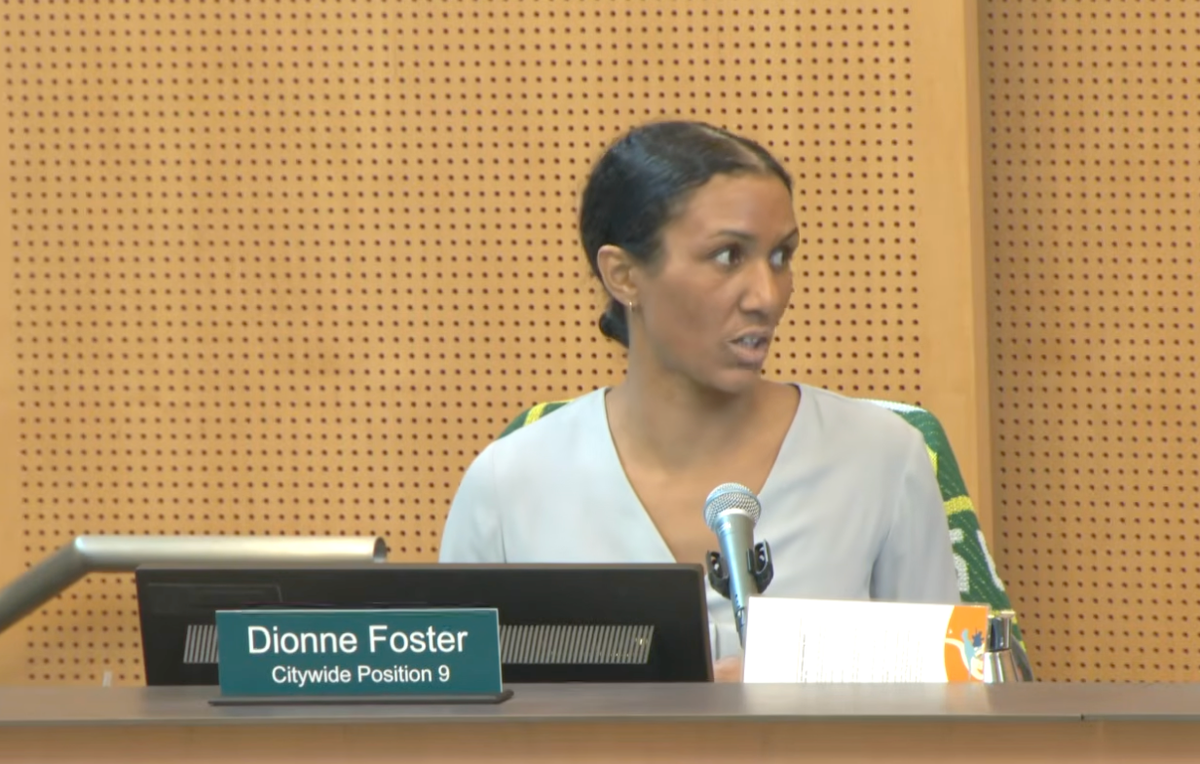
The meetings culminated in a close 4-5 vote on a piece of legislation sponsored by Councilmember Dionne Foster that would have required council to exercise the same fiscal responsibility they had just voted to continue to require of Seattle’s mayor.
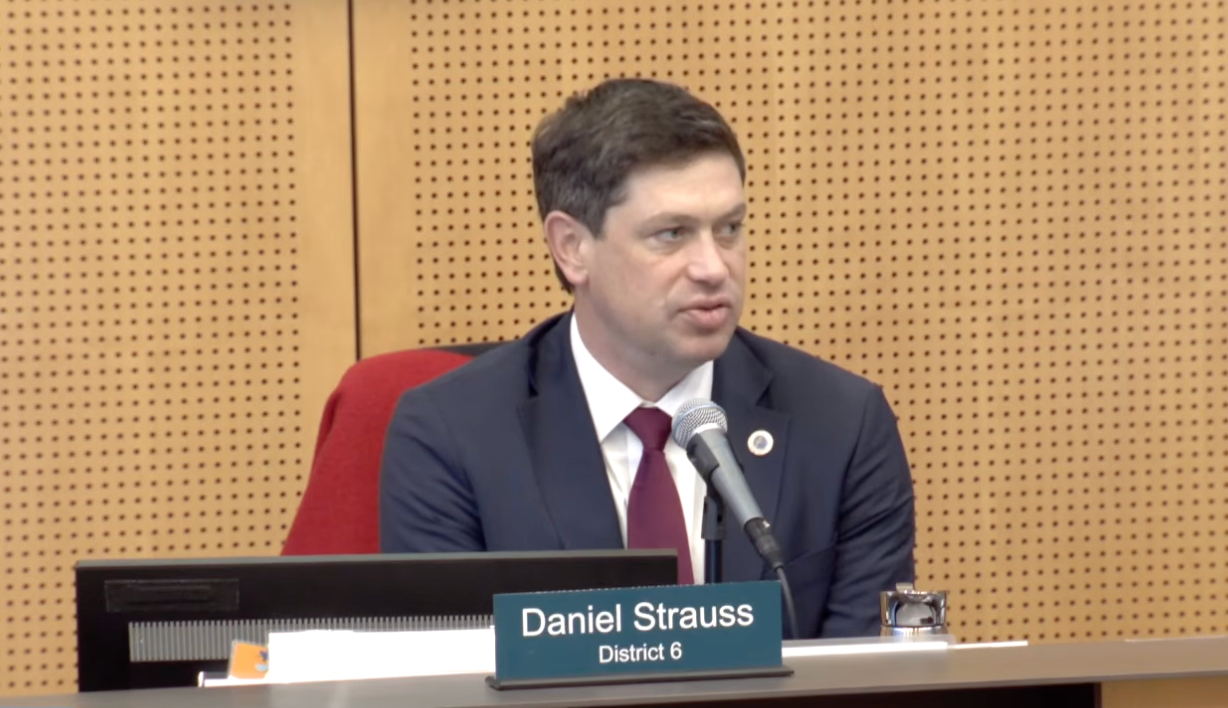
Council President Joy Hollingsworth and Councilmembers Bob Kettle, Maritza Rivera, Rob Saka, and Dan Strauss voted against Foster’s bill. The legislation would have required that the council’s ongoing spending not exceed ongoing revenue, a measure that would help prevent future deficits.
“As we passed the balancing requirement for the mayor last year, I think it's important that we are not holding ourselves to a different standard, or to say differently, if a standard is good enough to ask that we are requesting that another branch of government meet it, I believe it's fair that we ask ourselves to fall in line with that same standard,” Foster said.
In their comments before the vote, councilmembers appeared to tie themselves into rhetorical knots trying to express their commitment to fiscal responsibility while voting explicitly against it.
“I don't need a law to do what's right in this situation,” Strauss said. “I don't need a law to tell or an executive order to tell me how to do my job well.”
Strauss went on to complain that the Mayor’s Office has five months to develop their budget proposal whereas the Budget Chair only has five weeks to create the balancing package, a timeline that predates Strauss’s tenure as Budget Chair.
“As council, we need flexibility,” Saka said. “Again, we are the final check on the Executive as this legislative branch, and I think this ordinance, great in intent and purpose in terms of being sustainable – and I support those broader goals – I also think it would voluntarily restrict one of our most sacred constitutional and charter level responsibilities: deciding how public dollars are spent.”
Kettle agreed that flexibility was paramount, above fiscal responsibility.
“We are a co-equal branch, but we are in a disadvantaged position,” Kettle argued.
“I just want to be clear: it is not that I don't want to hold us accountable to ensuring we have balanced budgets years out, but it takes a certain kind of fiscal responsibility that, as I said earlier, I have not seen in council in many years in order to do that. And part of that, at least for this year's budget, this police piece, I'm sorry, the fire piece was really important to do,” Rivera said.
The council could have chosen to include ongoing funding for the Seattle Fire Department’s (SFD) overtime in their budget proposal instead of one-time funds, but that would have required that they make other difficult choices, which they largely chose to avoid.
Hollingsworth opted not to share her reasons behind her “no” vote.
Central Staff’s explanation, in response to a question from Lin about flexibility, that the legislation wouldn’t preclude the council from exercising discretion when necessary didn’t appear to convince councilmembers who were opposed.
Most of the councilmembers who voted against the bill originally ran on platforms calling for fiscal responsibility and budget audits in 2023.
“I am supportive of Councilmember Foster’s bill that would have held the Council to the same standard of fiscal responsibility as the mayor,” Seattle Mayor Katie Wilson said in a statement. “While it didn’t pass out of committee, I sincerely hope the Council takes it up again later this week.”
All legislation considered on Monday will receive another vote at the special Full Council meeting on Friday, November 20.
The trouble with one-time adds
Last Friday’s meeting included two executive sessions, whereas Monday’s meeting lasted for ten-and-a-half hours and included a last-minute presentation from the council’s Central Staff.
While the council’s budget process is always a bit rushed, Budget Chair Dan Strauss scheduled the final budget vote on November 20 instead of the traditional Tuesday before Thanksgiving, peeling away a few valuable days of discussion and error-checking. This year, holding the vote on November 24 would have added the complication of interim Councilmember Debora Juarez losing her voting power as soon as local officials certify election results that day, with Councilmember-Elect Nilu Jenks taking over when that happens. Unlike Juarez, Jenks is expected to vote with the progressive bloc, generally speaking.
Meanwhile, Strauss’s balancing package, introduced at the beginning of November, included new investments and new revenue sources that councilmembers barely had time to learn about and discuss. Strauss’s original intent was to vote on all budget amendments and legislation on Friday alone, significantly curtailing any chance for councilmembers to debate the merits of the proposals, but he was thwarted when a lawsuit filed by the Seattle Firefighters Pension Board required the council to have two substantial executive sessions to discuss the legal ramifications of the budget policies on which they were voting.
In spite of this setback, councilmembers ended up voting yes on most of the budget amendments before them, adding even more spending – most of it one-time – to a balancing package that had already added more than $40 million to Wilson’s original budget proposal. Even Strauss’s proposal to add $150,000 for Ballard holiday lighting and a lit-up Jimothy decoration was approved, albeit by a close vote. Strauss is a long-time Ballard resident.
City Budget Director Aly Pennucci sent a letter to council on November 6, warning them of the pitfalls ahead. While Pennucci praised Strauss for presenting a balancing package that didn’t present a deficit in 2029, she cautioned councilmembers that including so many supposedly “one-time” adds in the budget could easily knock the budget back into deficit territory in the future. Pennucci identified many one-time adds in the balancing package that had originally been requested as ongoing, calculating that those items being included as ongoing expenses instead would have led to a $21.5 million deficit in 2029. If all the one-time adds for 2027 became ongoing commitments, that would lead to a $41 million deficit.
“I heard clearly from many of you over the last two months that you consider ending one-time funding as a ‘budget cut.’ So, I want to be clear with you, City employees, and community partners, that items labeled as ‘one-time’ in the budget for 2027, 2028, or both, will be removed from the 2028 and/or 2029 baseline budget,” Pennucci wrote.
During Monday’s budget meeting, a week and a half after receiving this communication, Councilmember Maritza Rivera said she saw one-time budget adds as a way to potentially prove they should become ongoing.
“Sometimes that means proposing one-time funding with the understanding that that funding might not be ongoing, and we need to hold ourselves accountable for that,” Rivera said. “The hope is that the mayor sees the value of the investments that we include, and that that funding is made ongoing if needed. And of course, there's no guarantees that the mayor will do that.”
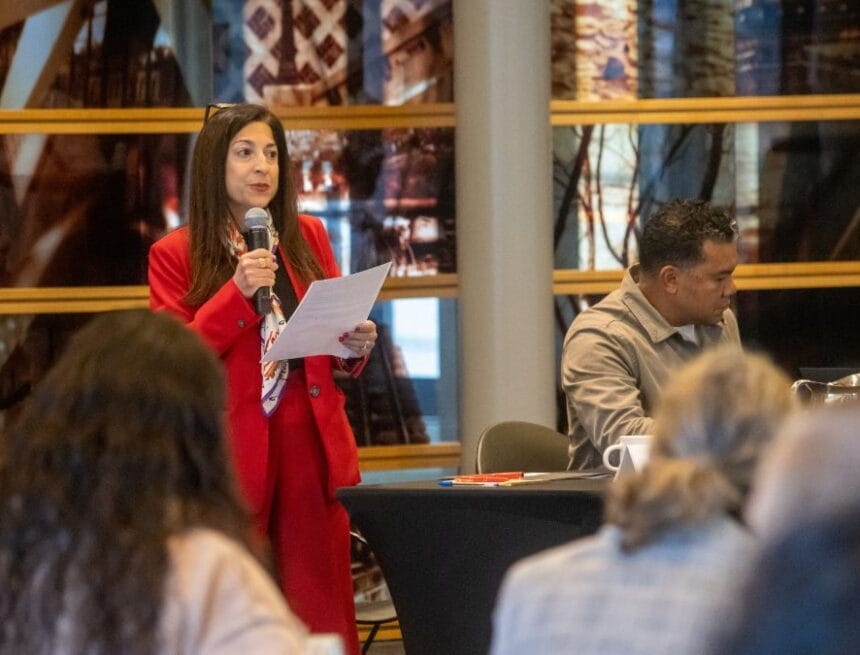
Pennucci also warned about Strauss’s diversion of $10 million from the JumpStart reserve, saying if the council didn’t change course, a new reserve policy would need to be developed next year.
“The stated intent of the JumpStart reserve is to protect JumpStart investments against future economic uncertainty, not to fund new Council priorities as it has been used two of the last three years,” Pennucci wrote.
Councilmembers also expressed concern about the adoption of a 0.01% children and families sales tax that was passed by King County earlier this year. Strauss proposed the City take their share of the tax, although he hasn’t developed a long-term spending plan for the usage of this new revenue. In addition, there was a lack of clarity around impacts this action would have on King County’s plans for the money.
“I can't speak fully to what those impacts might be at this time,” said Pennucci.
After Monday’s votes, Wilson released a statement on the council’s budget proposal, pointing out the one-time funding issue.
“The proposal that passed the Select Budget Committee increases spending from the General Fund by a net of $36 million in 2027, $31 million of which is one-time,” Wilson wrote. “This means that there is over $20 million of Council-proposed spending in 2027 that is not funded in 2028.” [Emphasis original]
There were a few notable budget amendments and pieces of legislation that did not pass council’s scrutiny, bucking the trend of layering on commitments.
Councilmember Alexis Mercedes Rinck’s proviso on $400,000 in the Seattle Police Department (SPD) until the department implements the three recommendations from the Office of the Inspector General (OIG) regarding their surveillance program was rejected with a 3-6 vote, with Foster and Councilmember Eddie Lin joining Rinck in voting yes.
“I do want to take this opportunity to just say on the record that Axon and Flock are one and the same,” Rinck said just before the vote. “They're companies that have their roots with one another. They have a deep and long history, but they started together. And I don't want us to think that we're necessarily choosing the lesser of two evils. I know Flock has gotten a lot more bad press with the challenges of their system. It's important to note that Axon has a fair share of their own challenges and in fact holds a nearly $32 million contract with ICE.”
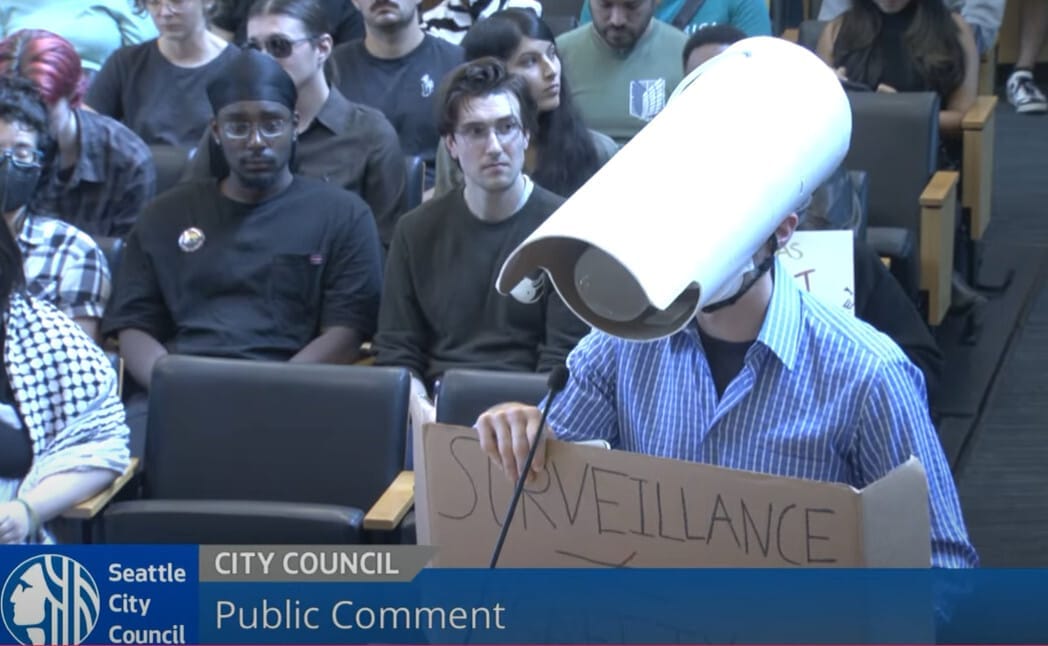
In a moment of inadvertent humor before the vote, Saka said he trusted the Mayor’s judgment on this issue. Councilmembers have been overtly critical of Wilson and her judgment for many months, particularly on her decision to pause their surveillance expansion -- before she ultimately greenlit it this month after further study.
Strauss’s proviso on $2.5 million of the Seattle Department of Transportation (SDOT) to support bus service on routes 15 and 17 in outer Ballard failed with a 4-5 vote, probably partially motivated by the fact that Route 15 no longer exists and can’t be brought back without a vote from the King County Council.
Finally, Foster’s legislation that would have created a designated fund if and when the City is able to recover the $13.1 million SPD mistakenly paid to its employees earlier this year didn’t receive enough support. The fund would have put aside any recovered funds for affordable housing instead of returning them directly to the General Fund.
Both Saka and Strauss insisted on verbal amendments to Foster’s bill, but even after she agreed to these changes, Strauss abstained, knowing this would mean the bill wouldn’t pass with a 4-4 vote.
The fire pension fund
Councilmembers had a sudden budget policy decision to make when the Seattle Firefighters Pension Board filed a lawsuit against the City on November 10, as reported by PubliCola. The Board objected to Wilson’s proposal in her budget to eliminate the actuarial account and transfer all of its funds to the statutory pension fund. Wilson had proposed using $10 million of that money for 2027-2028, thus freeing up General Fund money for other purposes.
In his balancing package, Strauss proposed using an additional $22 million of that money over the biennium, freeing up even more General Fund dollars and using up most of the money transferred from the actuarial account, making this another one-time budget fix.
“We are aware [of[ the litigation,” said Tara Lee, a spokesperson for the Mayor’s Office. “Without this change, additional reductions in the 2027-28 budget would have been necessary. Pension obligations in FPEN have always been funded on a pay-as-you-go, will continue to be funded on that basis, and fully funded every year.”
On November 12, IAFF Local 27, the Seattle Fire Fighters Union, sent councilmembers a letter that also opposed the change.
Strauss’s office told The Urbanist that Strauss has been in contact with the union throughout the budget process.
“To be clear – this in no way will impact the pensions the City pays firefighters or the funding they receive. That funding is, rightfully, legally secured,” Strauss told The Urbanist. “I am proud that this budget reverses cuts to the fire department that would have led to unit outages across the city and helps pay for critically needed repairs to the fireboat Leschi.”
On Friday, councilmembers pulled various amendments for individual votes in order to give themselves flexibility, should they need to reverse course, maintain the actuarial account, and plug a $25 million gap. Amendments pulled included the ones making the additions to the SFD’s overtime budget and their fireboat repairs.
But on Monday, councilmembers voted these amendments through without controversy, signalling that they would go forward with the closure of the actuarial fund as planned.
“Many of us take the concerns of Local 27 very seriously, and receiving that letter later in the process, I know I certainly had some questions that I wanted answers to, and I know a number of us did,” Rinck said, explaining why she had pulled several amendments.
Rivera called out councilmembers’ lack of awareness around the Seattle Firefighters Pension Board and the union’s lack of support of closing the actuarial fund, which she said should have been flagged from the beginning.
“Chair, I have to admit, at times this process has not felt or has felt less than forthright, and I hope that we're not here again next year because not having the transparency really leads to – and I've said this in the past – it feels like we don't have all the information at the proper time we should have it, and it also makes our constituents distrust government,” Rivera said.
 Amy Sundberg
 Amy Sundberg