We are the 98% that support Pike Place pedestrianization.
Seattleites love Pike Place Market, but hate random vehicle traffic pushing through the heart of it. That has been clear over and over again in surveys and polls, so it has come as a shock that the City is proposing to allow all car traffic Monday to Thursday from October through March.
The latest survey from the Seattle Department of Transportation (SDOT), conducted this past June, heard from 5,403 people and found “98% Support: Near-universal community backing for vehicle barriers.” Importantly, the survey also heard “96% Business Agreement: High alignment among local merchants and staff” among 224 respondents.
Limiting general car traffic in the Market is as close to complete political consensus as Seattle is going to get on anything. Support spans the spectrum of Seattle politics from The Stranger and Mayor Wilson, to the Seattle Times and former Mayor Bruce Harrell.
And let’s be clear about what we’re talking about when we say “limiting general-purpose car traffic” or “pedestrianization.”
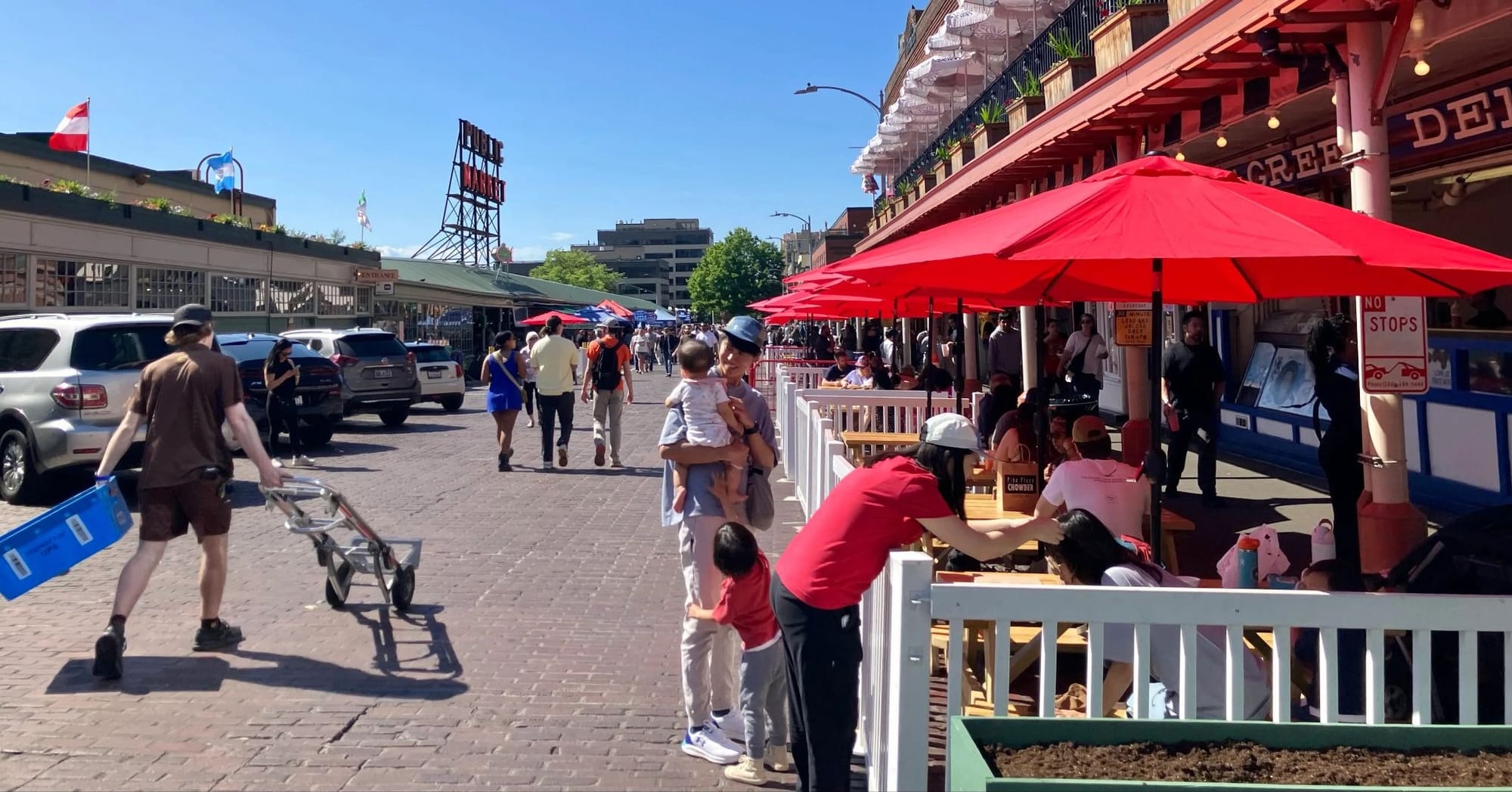
No one is seriously proposing preventing businesses from loading and unloading (regardless of whether businesses are using personal or commercial vehicles to do so), deliveries from reaching the Market, or emergency vehicles from responding when needed.
We’re talking about restricting unnecessary vehicle trips: tour buses, Ubers, lost tourists rubbernecking in rentals, and visitors who want to drive and park on the street for their personal convenience.
Limiting this unnecessary traffic makes Pike Place more functional, and makes room for what makes Pike Place special.
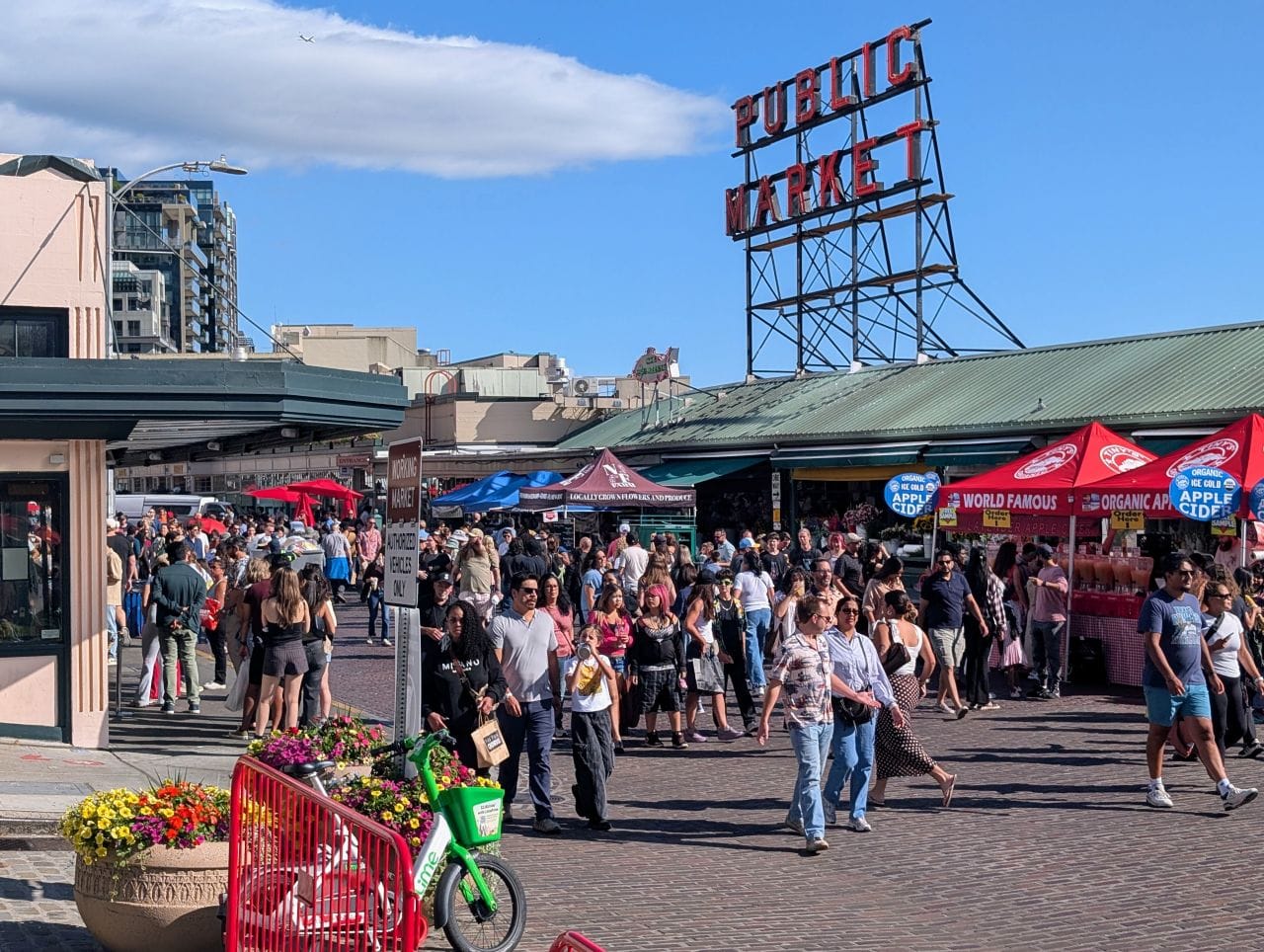
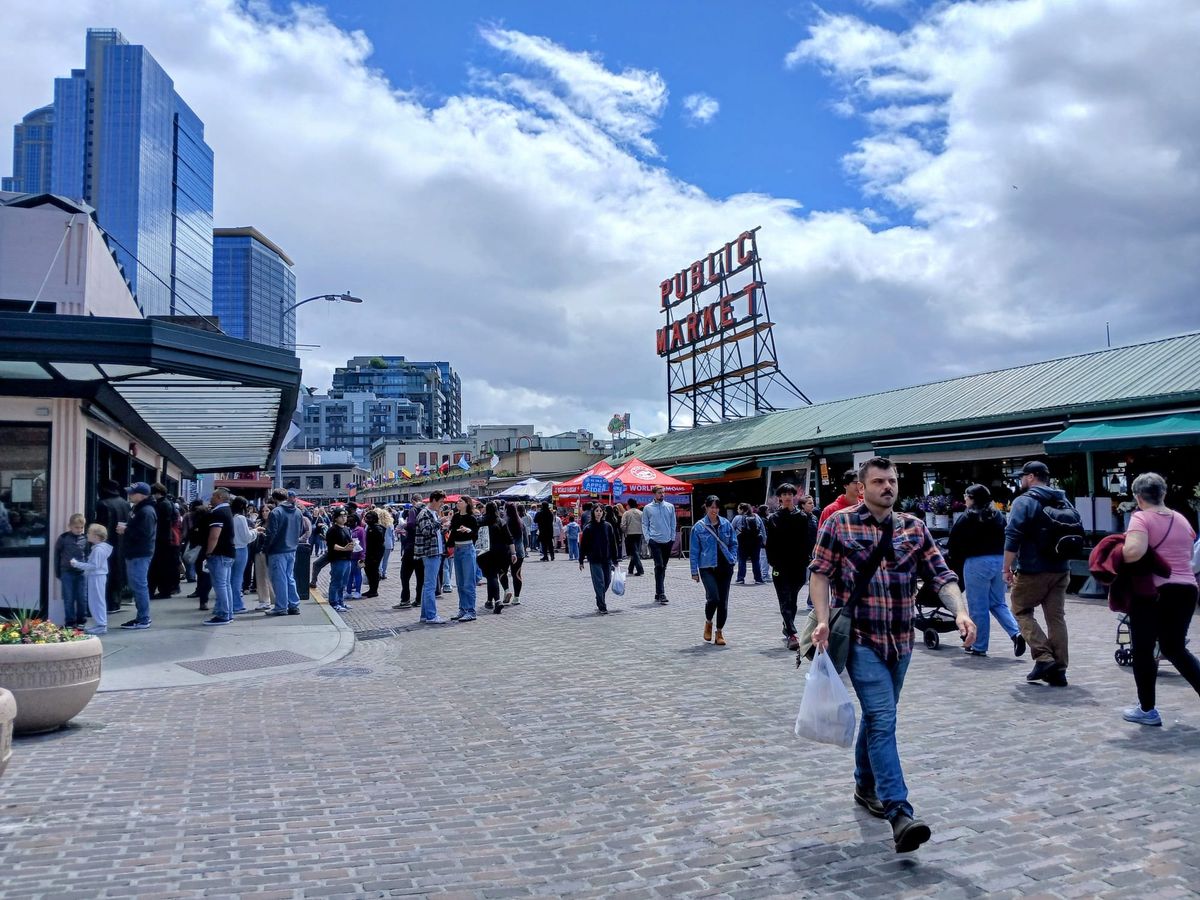
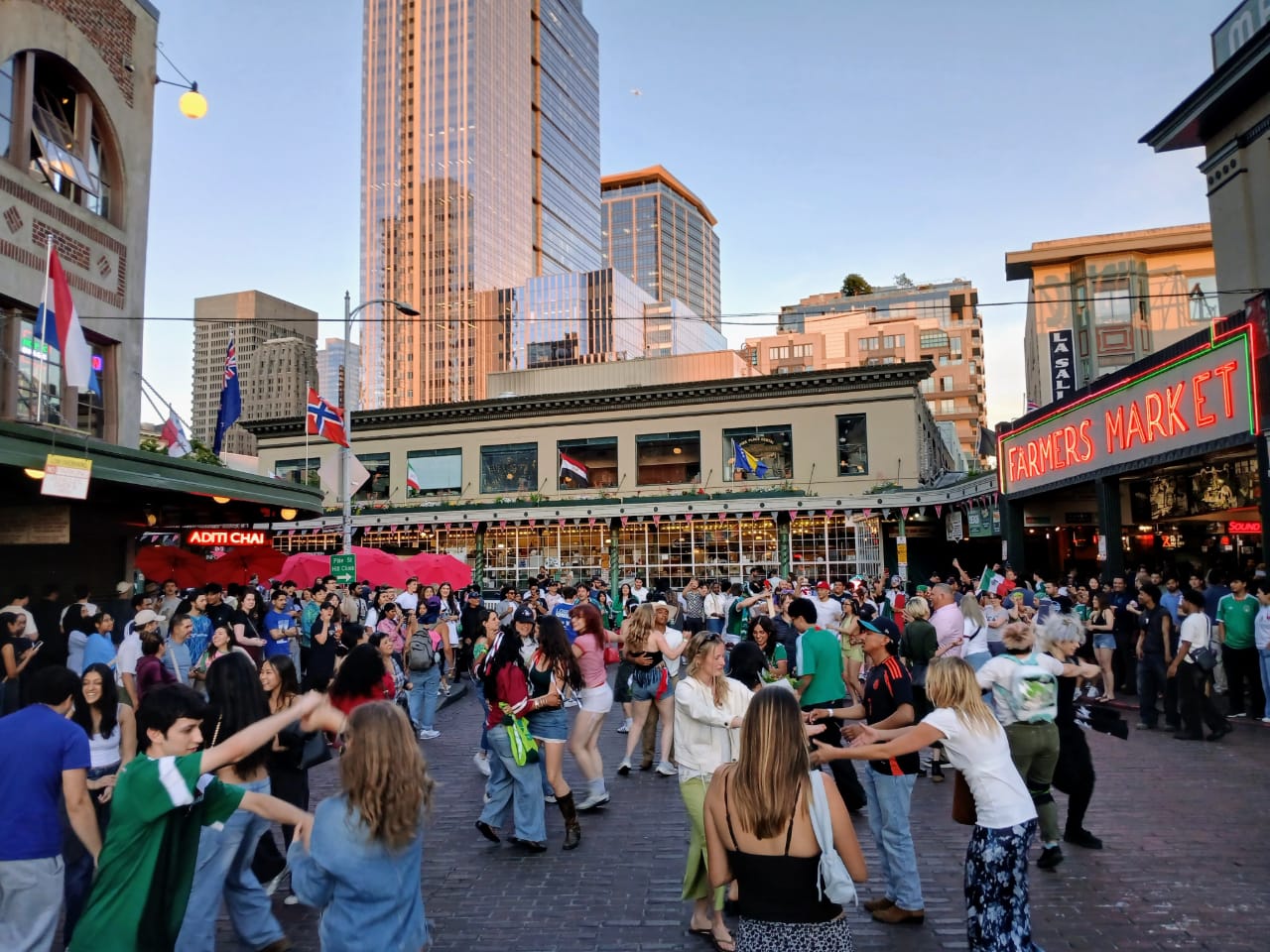
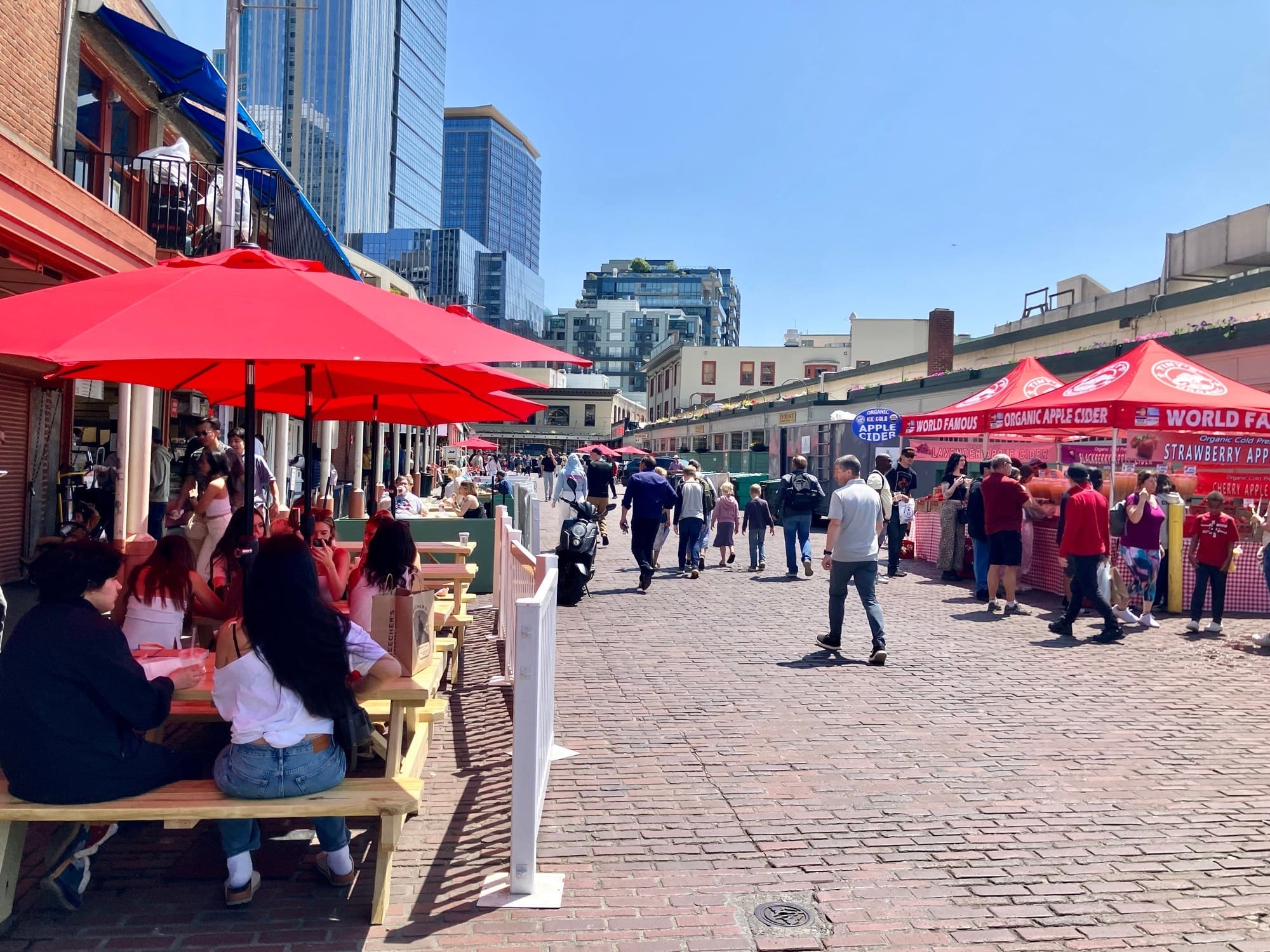
During the pilot, the Market has continued to function as both a loading dock and a front porch — a place where farmers can vend in the street, musicians can busk, visitors can sit and gather, and businesses can receive the deliveries they need to operate.
The good news is that, overall, the pilot has been successful:
- Visitation is up by 130,000 visitors, or 5%, in 2025 compared to the prior year before the pilot (Pike Place PDA data), compared to flat overall trends for visitors in downtown Seattle (Downtown Seattle Association data).
- Commercial sales grew by $12.4 million, or 6.5%, from 2024 to 2025, with broad-based success across business types and market areas (PDA data). The market also saw overall sales grow during the winter of the pilot (2025/2026) compared to the prior winter (2023/2024) (PDA data).
- 98% of people like it and want to keep limiting general purpose car traffic in the Market (SDOT survey, N = 5,403), including “96% Business Agreement: High alignment among local merchants and staff. (N = 224).
But unfortunately there were never any agreed on success metrics for the pilot, so the debate about it seems to be endless and anecdotal. The latest news is a proposal to scale back the pilot to allow more vehicles on the street Monday through Thursday starting this fall through the early spring — why?
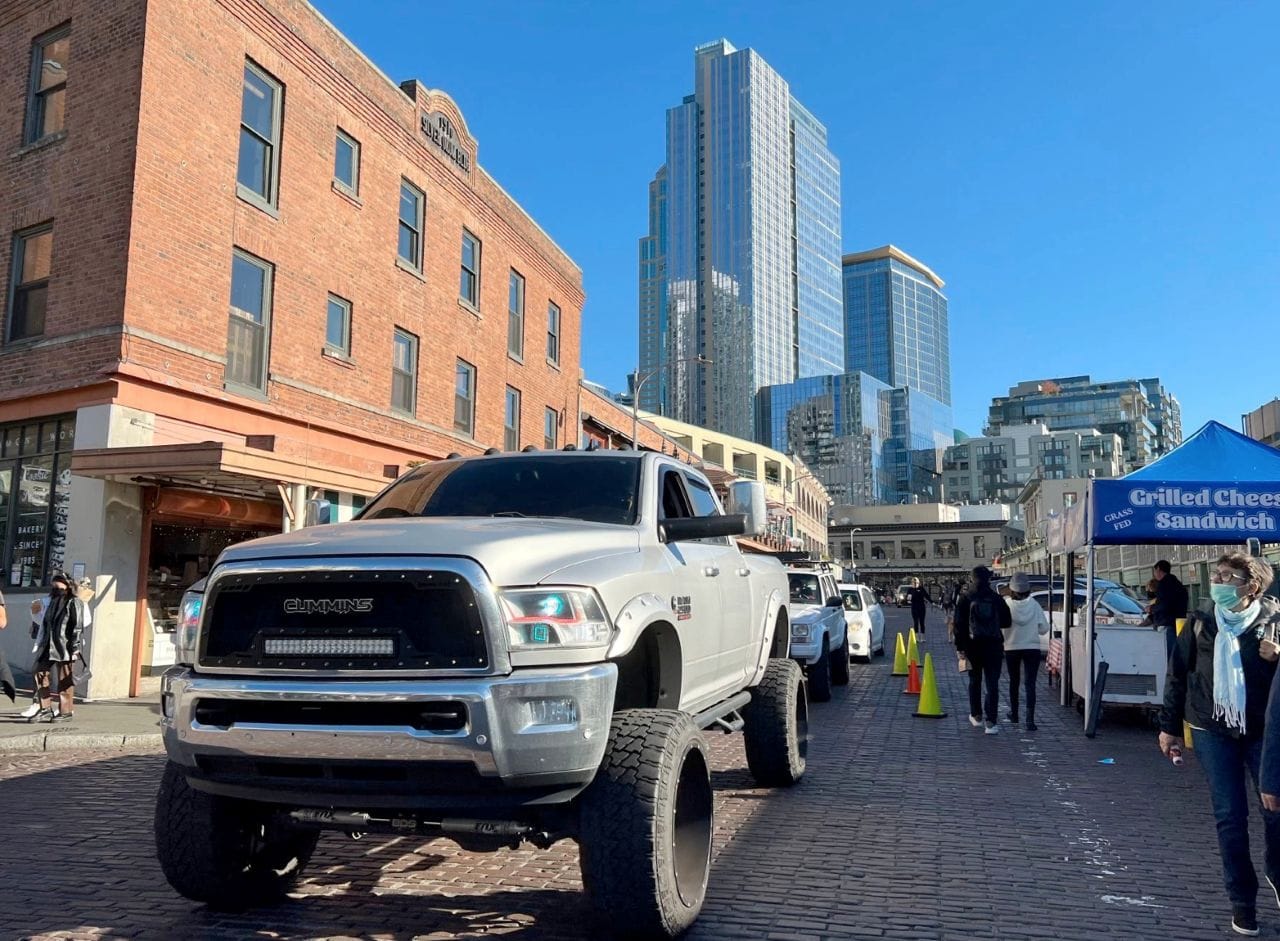
The issue seems to be that a subset of businesses say some of their driving customers are buying less because they find it inconvenient or expensive to park in the attached 800-stall public car parking garage (Urban Freight Lab memo). Exactly how many discouraged driving customers we are talking about is not clear. The Urban Freight Lab study found in a survey of 2,546 visitors to the Market that only 14.5% of customers drive (85.5% walk, bike, or take transit), but how many of those feel discouraged by having to park in the garage seems to be unknown — so we’re stuck with anecdotal concerns that seems to be driving this decision (pun intended).
The good news is that there are alternative solutions to retain these picky driving customers instead of opening Pike Place back up to general purpose traffic!
- Make the garage more appealing: The Urban Freight Lab suggests offering “parking validation in the Pike Place Market garage. This facility already has spaces set aside for monthly parking and could provide a few spaces for short-term parking.” The garage is attached to the market via accessible skybridges, and only requires a walk of one minute and 20 seconds to reach — shorter than the walk from the SoDo Costco’s parking lot.
- Improve parking on nearby streets: The Urban Freight Lab also recommends looking at adding more short-term parking options on nearby streets rather than the two-hour general parking that is common. For instance, there are four two-hour parking spaces adjacent to the Pike and Western Wine Shop, whose owners have been concerned about inconveniencing customers picking up a case of wine.
- Lean into delivery: Grocery delivery has been exploding in recent years, and might be a compelling option for those who still feel inconvenienced by the garage of nearby street parking (see Findlay Market’s delivery app for example).
Taking this approach would make for a better shopping experience for the 85.5% of customers who don’t drive, and open up possibilities to grow the customer base even more. Last fall, we interviewed five pedestrianized markets in Cincinnati, Burlington, Boulder, Charlottesville, and London to learn how they stay active and vibrant all winter long. Here are a few possibilities inspired by those conversations:
- More farmers on the street: Seattle’s downtown core has doubled in population to over 100,000 in the last 20 years — how could the Market better attract that hyperlocal customer base that is poorly served by traditional grocery stores? It’s worth pondering why Capitol Hill, the U District, West Seattle, and Ballard all have year-round farmers markets but the Pike Place Market’s “Produce on Pike” only spans June to September. It’s worth noting that the “farmers were most favorable to the pilot” of all the businesses surveyed by the Urban Freight Lab! And to be a true source of food and other supplies for working Seattleites, Pike Place businesses need to stay open past 5pm, perhaps shifting their hours from the morning to the evening time.
- Year-round seating: Seattle has a mild climate comparable in many respects to northern Europe where year-round outdoor pedestrian streets are common, with stretches of pleasant weather where Seattleites are itching to get outside — let’s give them a place to sit on the street to keep those customers inside the Market longer.
- More winter events: While Pike Place Market hosts events worth visiting for throughout the year, the other markets we interviewed have a wider variety of offerings to attract locals throughout the winter. There is clearly a hunger for it, as many Seattleites seem willing to pay a steep entry fee for the kitschy Christmas Market at the Seattle Center every year — Pike Place could do a much more welcoming and popular version.
Pedestrianization would also mean more space for vendors to safely load and unload on the street.
It would mean parents can shop with their children without worrying about random car traffic.
It would mean people with disabilities can walk or roll in the street without worrying about whether they will be seen by a backing-up tourist in a rental SUV.
It would mean that Pike Place is more than a parking lot — it’s both the loading dock and the front porch of the heart of Seattle. It’s a destination for the public to visit, shop, gather, and build community. It’s no wonder 98% of Seattleites want to keep it prioritized for people — the real question is why can’t our governance structures deliver a better Pike Place for everyone?
You can ask them by emailing your thoughts to: Pike Place Market Historical Commission <MinhChau.Le@seattle.gov>, Pike Place Market Preservation and Development Authority (PDA) <info@pikeplacemarket.org>, SDOT Director <angela.brady@seattle.gov>, and Mayor of Seattle <mayor.wilson@seattle.gov>.
 Ryan Packer
 Ryan Packer